Vibe Coding, SheBuilds, and Why Every Woman With an Idea Should Be Building Right Now
By Kirsty Skeates, Founder of PetBizAI | March 2026
I want to show you something.
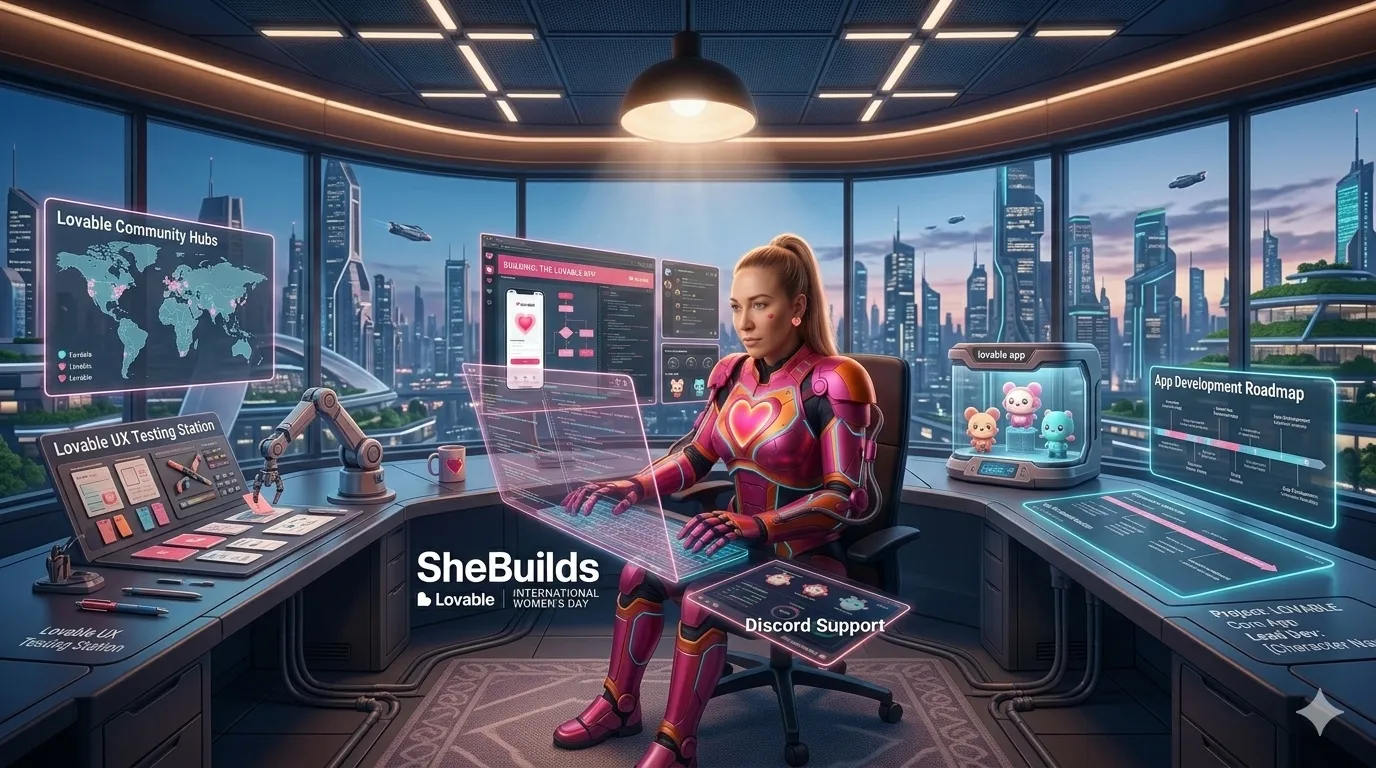
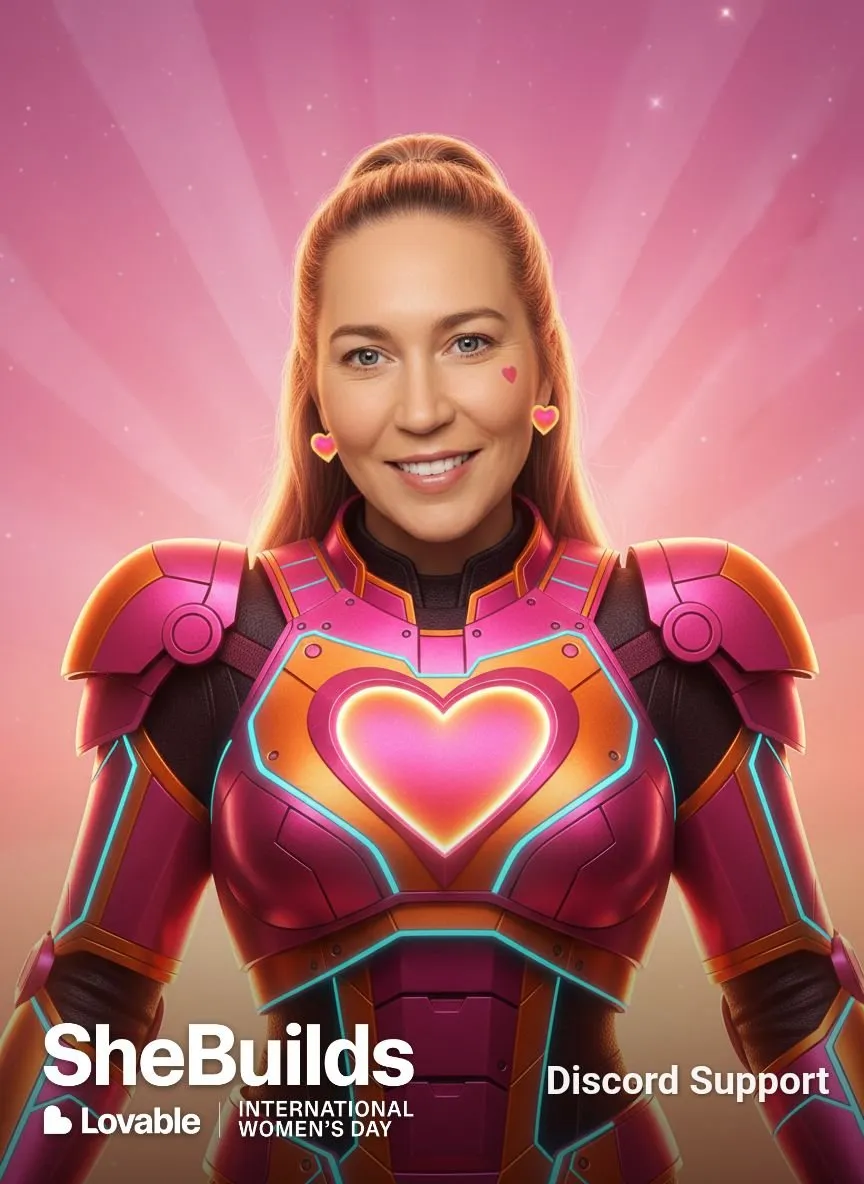
That image at the top of this post? That’s me. Sort of.
It’s my official SheBuilds on Lovable avatar for International Women’s Day. Me, reimagined in pink and orange armour with a glowing heart on my chest and little heart earrings, because apparently that’s who I am now and honestly I’m here for it.
I’m part of the SheBuilds on Lovable community as Discord Support, one of the volunteers helping women around the world as they build apps and digital products for International Women’s Day.
When I first saw this avatar, I laughed. Then I felt something I wasn’t quite expecting. Pride. Genuine, quiet pride.
Not because I’d done something extraordinary. But because not that long ago, I would have read a post like this one and thought: “That’s not for me. I’m not a tech person. I ran a hydrotherapy pool. I know about dogs, not code.”
And I would have been wrong.
I Was Never Someone Who Waited on the Sidelines
I spent years running Fit4DogsUK, a canine hydrotherapy centre in East Yorkshire. My days were early starts, full appointment books, wet dogs, and the particular joy of watching an animal move better than it did the week before.
I loved it. I also wore every hat in the business: therapist, receptionist, marketer, bookkeeper, client liaison. If you run any kind of small business, you already know exactly what that feels like.
But even while I was doing all of that, I was on the waiting list for OpenAI. I was one of the first people to log in when access opened up. And from that point I was in it every single day — learning, experimenting, figuring it out as the models updated, as new versions dropped, as the whole thing kept shifting underneath me. I wasn’t waiting for someone to explain it. I was just in there, doing it.
That curiosity never stopped. It led me to start PetBizAI, a platform helping pet professionals actually use AI in their businesses. And it led me here — to vibe coding, to Lovable, to a world where the gap between having an idea and building it has closed in a way I genuinely didn’t think I’d see this soon.
Vibe coding is the term for what’s happening right now: building software through natural language, through prompts, through feel. No syntax. No compiler errors. Just describing what you want and iterating until it’s real. For someone who has spent years living at the intersection of AI and practical problem-solving, it feels like the moment everything clicked.
And now, alongside PetBizAI, I’m building something completely different. Something personal. Something that started with a very familiar frustration.
The App Idea That Started in a Group Chat
[
](https://bffsocial.lovable.app)
You know that group chat. The one where someone suggests a girls’ trip in January and by March you’re still scrolling back through 400 messages trying to find out if anyone actually booked the Airbnb.
Who’s paid? Who’s coming? Is it still happening? Does anyone know?
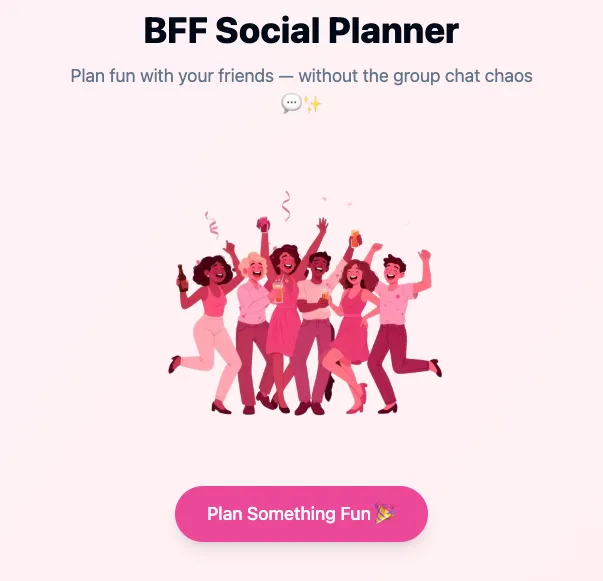
That chaos (the excitement that gets buried under logistics) is exactly what I wanted to fix. So I’m building BFF Social Planner.
The idea is simple: you create an event (brunch, a hen party, a girls’ trip, a birthday weekend), invite your friends, and the app becomes the one place where everything lives. RSVPs, payments, the group chat, the countdown. No more digging through WhatsApp threads. No more “wait, did she say she was coming?”
The bit I’m most excited about? The app generates shareable countdown images like “11 days to brunch!” that people can drop straight into WhatsApp or post on social media. Because half the fun of a plans is the build-up, and right now that build-up gets completely lost in the noise.
BFF Social Planner is still being built. But the idea? That came from a group chat. From a problem every woman I know has had at least once. Probably last week.
What Actually Happened When I Tried to Build It
Here’s what I expected: confusion, technical walls, a steep learning curve, and probably giving up at some point.
Here’s what actually happened: it was faster and easier than I thought possible.
I used Lovable, an AI-powered app builder, and I described what I wanted in plain English. Not code. Not technical specifications. Just: here’s the problem, here’s who it’s for, here’s what it needs to do.
And it built.
Not perfectly, not all at once, and not without iteration. I refined things. I rephrased. I tested and adjusted. But at no point did I need to understand how the software actually worked under the hood. My job was to know what the experience should feel like for a group of friends planning a night out. The AI handled the technical layer.
The thing I thought was the barrier (technical knowledge) turned out not to be the barrier at all. The real requirement was clarity about the problem. Knowing your users. Understanding what frustrates them and what would make them smile.
That’s not a tech skill. That’s a people skill. And most of us have been building those for years.
This connects to something I’ve been thinking about a lot lately. Growth strategist Elena Verna recently wrote about the shift from MVP (Minimum Viable Product) to MLP: Minimum Lovable Product. Her argument is that with AI collapsing the cost of building software, functional just isn’t enough anymore. “If it’s not lovable, it’s not viable in the market anymore.”
She’s right. And it reframes everything about why BFF Social Planner is worth building the way I’m building it. Anyone can bolt together a group RSVP tool. But a tool that makes you genuinely excited about your plans, that gives you something to share, a countdown to post, a moment of hype in a sea of logistics. That’s a product where people feel something. That’s what Elena calls a lovemark. That’s what I’m aiming for.
If you want to understand why this moment in building is so different from anything that came before, her piece is worth ten minutes of your time.
Why SheBuilds Meant Something to Me, and Why I Came Back
I’m actually a SheBuilds alumna from Season 2, so this community isn’t new to me. I came in as a builder, learned alongside women from all over the world, and built something real. Now, for International Women’s Day, I’m back, this time as Discord Support, being there for the new cohort as they go through exactly what I went through.
Answering questions. Helping people get unstuck. Cheering them on when it feels hard and celebrating when it clicks.
Which, when I think about it, is exactly what I’ve always done. Just in a different context, with fewer wet dogs.
Receiving that volunteer avatar wasn’t just a nice moment. It was a marker of how far the journey had come. From nervous Season 2 builder to someone who gets to help others start theirs.
It said: you are part of this. You, the former hydrotherapist, the accidental founder, the woman who spent years thinking tech was someone else’s territory. You belong in this space.
And if I belong here, so do you.
The Fireside Chat That Made It Real
On International Women’s Day, I attended the live global broadcast straight from Lovable’s HQ in Stockholm. Not as a passive viewer. As part of the community helping make it happen.
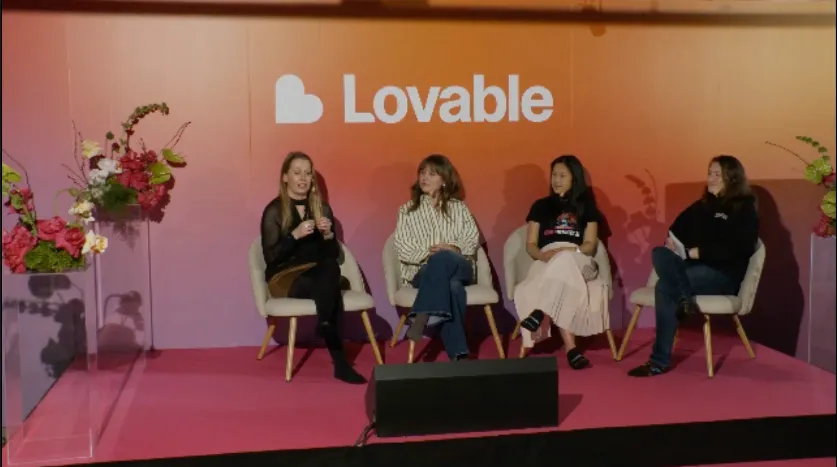
The fireside chat panel live on stage at Lovable HQ, Stockholm, International Women’s Day 2026.
Hosted by Whitney Menarcheck, SheBuilds Community Manager at Lovable, the programme brought together some of the most important voices in this space right now: Anton Osika, Co-Founder and CEO of Lovable; ** Elena Verna**, Head of Growth at Lovable; ** Margot van Laar** from Anthropic’s Technical Staff; and ** Helen Kupp**, Founder of Women Defining AI.
This wasn’t a panel about what AI might do one day. These were people actively building the tools and shaping the policies that determine who gets to build, and who doesn’t.
The event reached builders across 100+ community-led events in 35+ countries. People tuning in from living rooms, co-working spaces, community centres. All of them choosing, on this particular day, to start something.
The message running through all of it: the age of the builder is here, and it’s for everyone. What matters now isn’t permission or pedigree. It’s participation.
Elena Verna: “Being a user of software is so 2010”
Elena opened with something I’ve been thinking about ever since. She didn’t mince words: decades of panels, talks, and lip service about women in tech have produced very little actual change. SheBuilds isn’t another panel. It’s a platform open to everyone. Right now, no degree required.
What struck me most was this: “We don’t build for functionality. Sometimes we do. But we build for empathy. We build software that feels right. Most importantly, we build for community around us.”
That landed for me. Because BFF Social Planner isn’t a productivity tool. It’s a community tool. It’s built around the feeling of shared excitement, the hype of something coming, the joy of doing things together. That’s not a feature. That’s a reason to exist.
She also spoke directly to the confidence gap, the voice in your head that asks am I actually able to do this? Her answer was clear: confidence doesn’t come from certainty. It comes from figuring things out. And you don’t have to figure it out alone.
“No woman has made a change around her by not pushing through that feeling of uncertainty.”
Margot van Laar, Anthropic: Your role is the context you bring
Margot, one of the first female applied AI engineers at Anthropic outside the US, explained what’s actually happening under the hood when someone without a coding background builds with AI. The models reason through the problem, build a plan, write and test the code step by step. You don’t need to understand any of that.
What you do need is something far more human: the ability to communicate what you want. “Where the human judgment really comes in is how do I give the model enough context? That’s where your role as a builder really comes in.”
In other words: the clearer you are about the problem, the better the output. That’s not a technical skill. That’s knowing your users. Knowing your world. And most of us have been doing that for years without ever calling it product management.
Helen Kupp, Women Defining AI: Stop waiting for someone else to solve it
Helen built her entire nonprofit’s member portal and website from scratch as a non-technical founder. Two years ago, she says, that would have been impossible.
Her point about waiting hit home: “In the before world, we have to just say, well, maybe someone else will figure that out. Maybe someone else will deem that this is important enough. But now that can be us. Now that someone else is us.”
She also said something I want to put on a wall: share your idea publicly. Share early. Share often. The fear that someone else is already doing it, or that it’s not good enough yet. That’s the thing that keeps ideas trapped in notes apps and group chats. The feedback you need only comes when you ship.
The moment that summed it up
Two SheBuilds Season 2 alumni flew in from Spain to be at the Stockholm event in person.
That’s the kind of thing that tells you this is real. Not a corporate initiative. Not a scheduled programme. A community of women who feel the pull of this moment strongly enough to get on a plane.
I was there for Season 2 too, just not in person. And now I’m back, as Discord Support, helping the next wave of builders find their footing. That arc means something to me.
The full recording of the IWD global broadcast will be available shortly. I’ll add the link here when it drops. Worth watching in full.
What I’d Say to Anyone Sitting on an Idea
If you’ve got something you’ve been meaning to build (an app, a tool, a digital product) and you’ve been waiting until you feel ready, or until the timing is right, or until someone explains the tech side properly:
Stop waiting.
The version of you with lived experience and a clear sense of the problem is already the most qualified person to build the thing you’re imagining. You just need the tools to catch up with the idea. And right now, they have.
Here’s a practical place to start:
-
Write down the problem. Not the solution. What frustrates you? What frustrates your friends, your clients, the people around you? The best ideas are hiding in everyday irritations.
-
Get comfortable with AI tools first. If the idea of building feels big, start smaller. I use PetBizAI to run the content and marketing side of my pet industry work. Getting fluent with AI in a familiar context builds confidence for bigger steps.
-
Try Lovable with no pressure. Sign up for a free trial, describe your idea in plain English, and see what comes back. You’re not committing to anything. You’re just finding out what’s possible.
-
Use the knowledge base generator before you start prompting. This one came straight from the SheBuilds Discord during the build day, and it’s genuinely brilliant. Before you type a single prompt into Lovable, go to loadable.dev/tools/kb-generator, describe what you’re building, and it generates a knowledge base to drop into your project settings. It pulls together everything Lovable needs to understand your idea from the start. Less back and forth, better output from the first prompt. (The message in Discord also noted: “Men don’t use knowledge 😄” which honestly explains a lot.)
-
Find your community. The SheBuilds community is full of women building and figuring it out together. That matters more than you’d expect when you’re in the middle of something new.
-
Ship the imperfect version. Done is better than perfect. Always. BFF Social Planner isn’t finished yet. But it exists, it’s taking shape, and it’s real in a way it never would have been if I’d waited to feel ready.
This Is What International Women’s Day Looks Like Right Now
It’s not always a big stage or a headline. Sometimes it’s a woman in East Yorkshire, power cut just fixed, laptop back open, building a social event planner for friend groups because group chats are chaos and someone had to sort it out.
The ideas are already there. The tools are finally here.
That’s what I felt when I got that SheBuilds avatar. Not just pride in what I’m building. Pride in the fact that I stopped waiting for someone else to build it for me.
If you’ve got an idea, this is your nudge.
Ready to Start?
-
Explore PetBizAI: AI tools built for pet professionals: petbizai.app
-
Join the SheBuilds community: shebuilds.lovable.app
-
Read next: How AI Tools Are Changing the Way Pet Businesses Market Themselves
Continue Learning: Pet Business Guides
Explore more practical guides on AI tools, client agreements, and growing a modern pet business.
Featured
[
](/blog/pet-business-terms-and-conditions-mistakes)
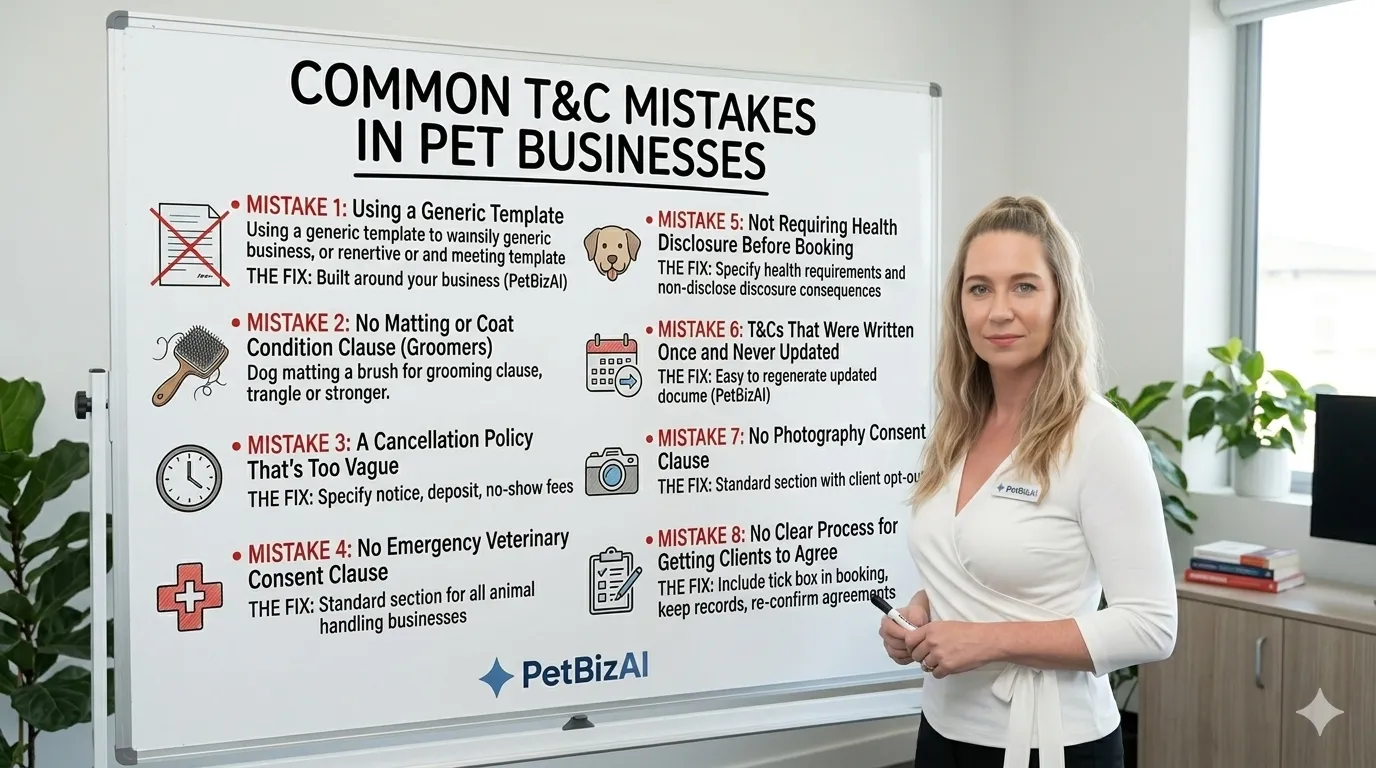
Common Terms and Conditions Mistakes Pet Businesses Make (And How AI Fixes Them)
Many pet businesses have Terms and Conditions, but they’re often copied, outdated, or too vague to offer real protection. This guide explains the most common T&C mistakes pet businesses make and how clearer policies or the PetBizAI T&C Assistant can help prevent disputes around cancellations, payments, and client expectations.
[
](/blog/dog-groomer-terms-and-conditions-template-uk)
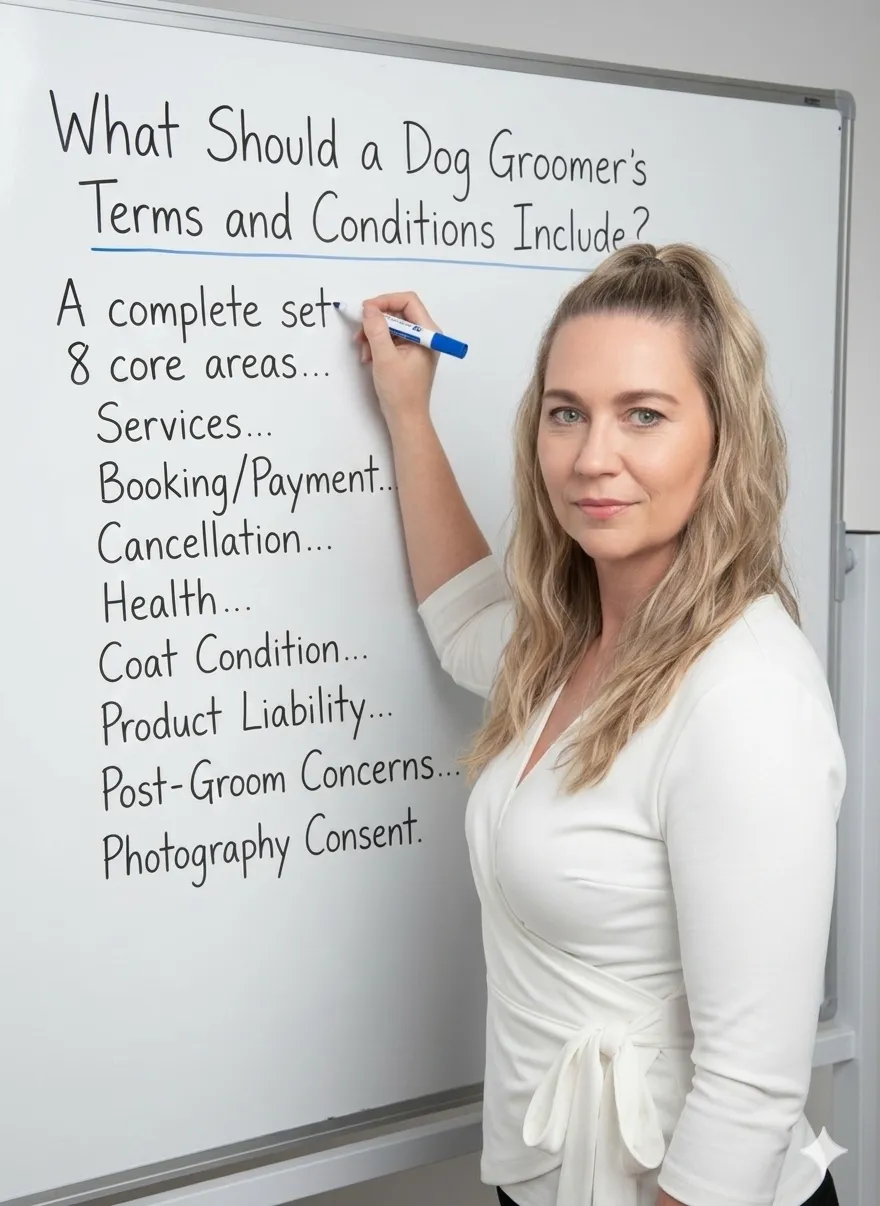
Dog Groomer Terms and Conditions Template (UK)
Learn what dog groomer terms and conditions should include in the UK. This guide explains the 8 essential policies every grooming business should have, from cancellations and matting to liability and client consent.
[
](/blog/dog-groomer-terms-and-conditions-uk)
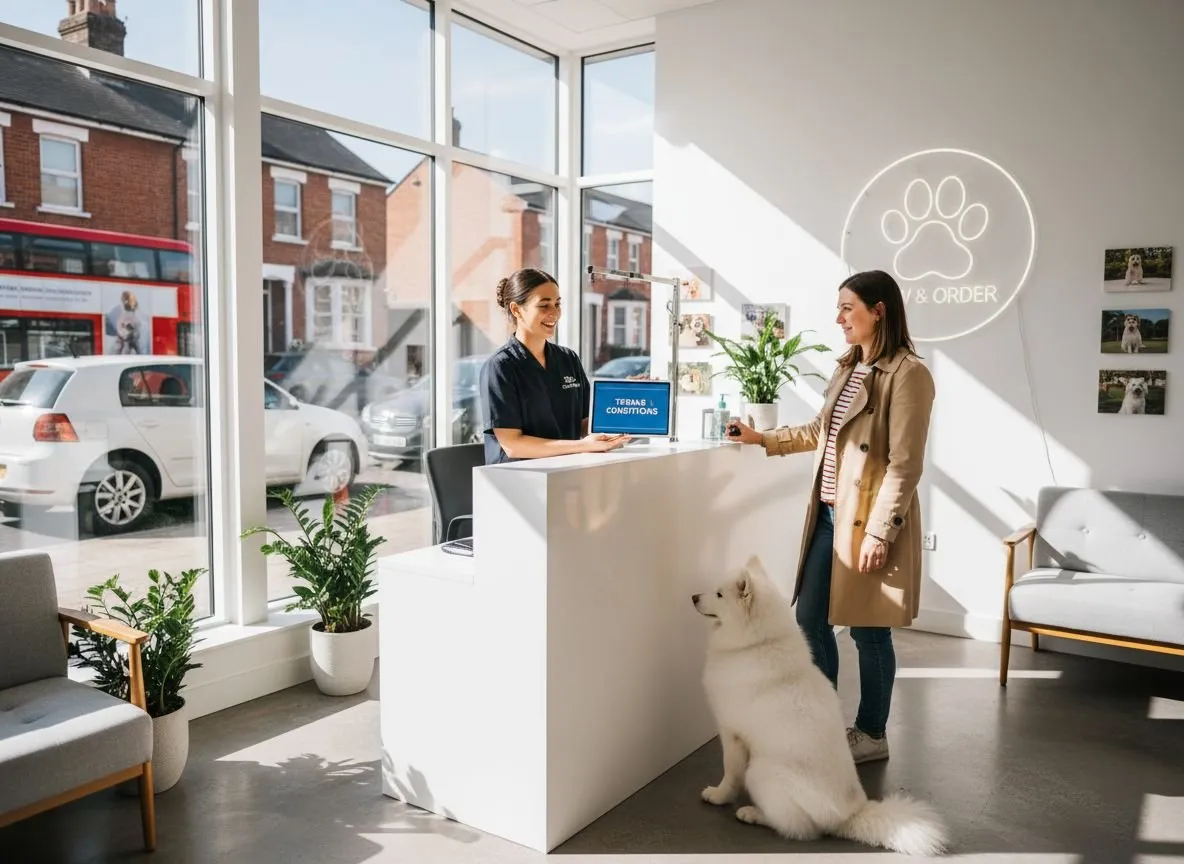
How to Use the PetBizAI T&C Assistant: A Step-by-Step Guide
Learn what dog groomer Terms and Conditions should include in the UK. This guide explains the 8 essential policies every grooming business needs — from cancellations and matting to liability and client consent — and shows how to create your own T&Cs in minutes using the PetBizAI assistant.
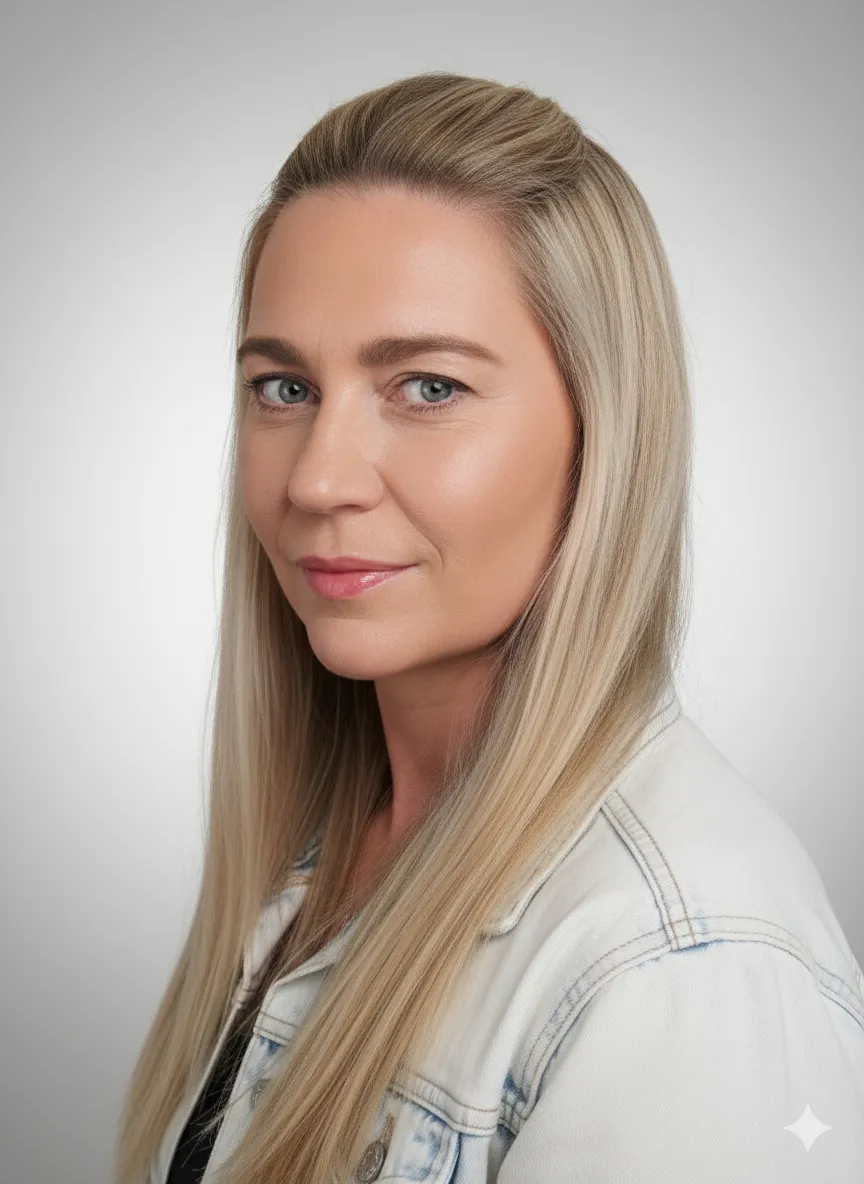
Kirsty Skeates — Founder of PetBizAI
Kirsty Skeates is the founder of PetBizAI, a platform helping pet industry professionals use AI to grow their businesses, and is currently building BFF Social Planner. She is a former canine hydrotherapy centre owner and a speaker at Pet Industry Federation events. She builds things. Usually faster than expected.
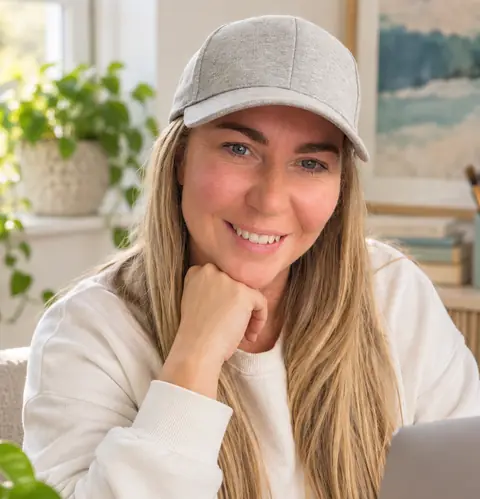
About the author: Kirsty Skeates
Kirsty Skeates is the founder of PetBizAI. She has 10 years in the pet industry, including five years running Fit4DogsUK, a canine hydrotherapy and rehabilitation clinic in Beverley, East Yorkshire. She builds websites and AI tools for independent businesses and speaks at Pet Industry Federation events on AI adoption. Every guide is written or reviewed by Kirsty.